




RTCP vs. Fixed-Axis Machining: A Complete Guide to Five-Axis CNC Control
Subtitle: Understanding Rotational Tool Center Point (RTCP) and 3+2 fixed-axis machining on modern five-axis CNC systems.
Key Takeaways
- RTCP (Rotational Tool Center Point) automatically compensates for tool tip displacement whenever a five-axis machine’s rotary axes move, keeping the tool tip on the programmed path.
- Without RTCP, programmers must manually calculate offsets for each machine’s specific tool length and rotation radius, making programs machine-specific and hard to reuse.
- Fixed-axis machining — also called 3+2 axis machining or five-axis positioning machining — locks the rotary axes after tilting, letting the machine cut like a standard 3-axis system.
- RTCP is best for continuous, simultaneous 5-axis (5-axis linkage) work on complex curved surfaces, such as impeller blades and aerospace components.
- Fixed-axis (3+2) machining is ideal for angled holes, inclined-surface drilling, tapping, and finishing operations that benefit from standard G81/G83 cycles and G41/G42 tool radius compensation.
- HNC five-axis CNC systems support both modes, giving manufacturers the flexibility to choose the right approach for each feature on a part.
Introduction: Why Five-Axis Control Matters
Five-axis CNC machine tools are considered the pinnacle of high-end manufacturing equipment. From aircraft engine impellers and ship propellers to precision medical implants and 3C product housings, machining complex curved surfaces efficiently depends on five-axis technology.
Two terms come up constantly among engineers new to five-axis machining: RTCP and fixed-axis machining. This guide explains what each one means, how they differ, and how to apply them correctly in production.
What Is RTCP in Five-Axis Machining?
RTCP stands for Rotational Tool Center Point — often called “tool tip point following” or “tool tip point control” in the industry. It is a real-time compensation function built into the CNC system’s control kernel.
What Happens Without RTCP?
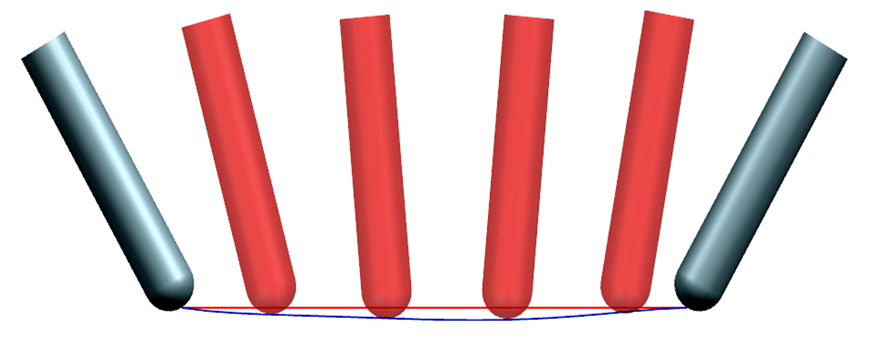
In five-axis machining, whenever a rotary axis pivots, the tool tip inevitably shifts in space. Without RTCP, the control system only drives the rotary motor angle — it does not compensate for the resulting tool tip displacement. The tool tip then deviates from the programmed path, causing overcutting or undercutting.
Without this compensation, the programmer must manually calculate an offset for every point in the CAM software, based on the exact tool length and the machine’s rotation radius. The resulting program is tied to one specific machine and cannot be reused elsewhere. If the tool changes or wears down, the entire program has to be regenerated — a slow process with little margin for error.
Advantages of Using RTCP
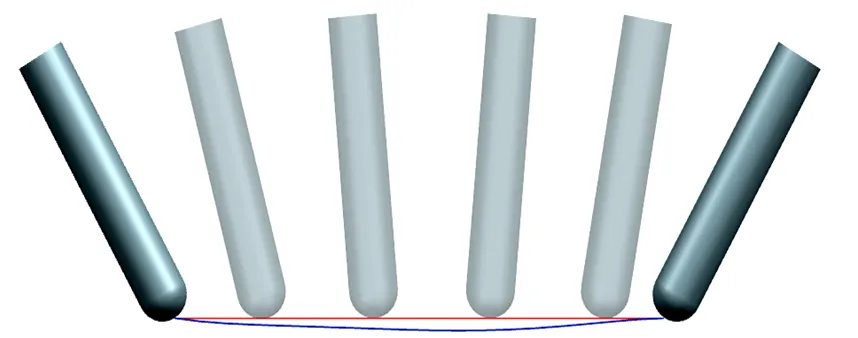
- Simplified programming: CAM programs no longer need to account for tool length or machine geometry, so the same program works across compatible machines without rework after a tool change.
- Guaranteed precision: The control system compensates for mechanical variation in real time, which is critical for high-precision, smooth-surface continuous machining.
How to Enable RTCP on HNC Five-Axis Systems
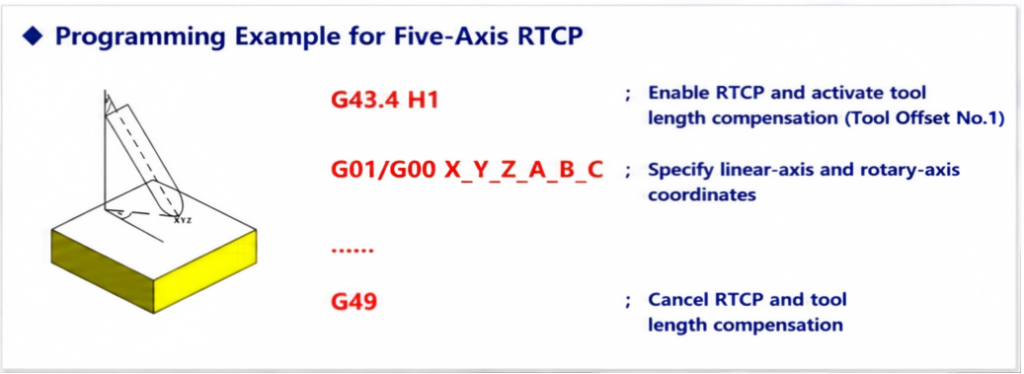
HNC (Huazhong CNC) five-axis controllers provide dedicated G-code commands to switch RTCP on and off. Consult your machine’s programming manual for the exact syntax, as command parameters vary slightly by control version and kinematic configuration (head-head, head-table, or table-table).
What Is Fixed-Axis (3+2) Machining?
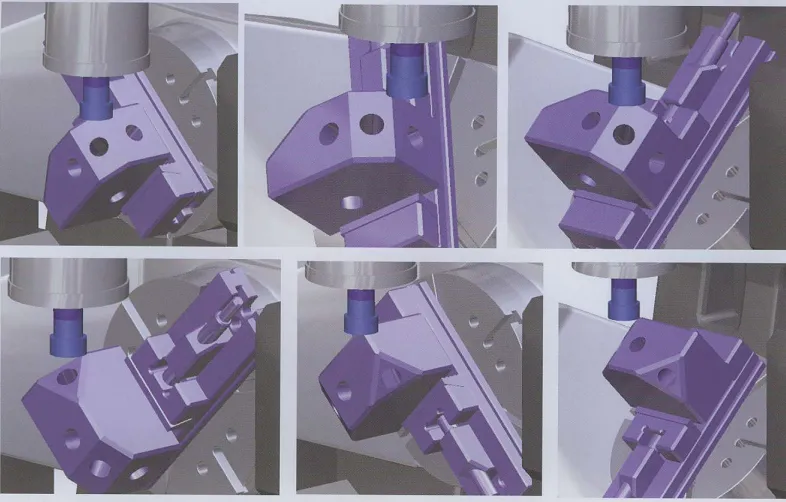
Fixed-axis machining — also known as 3+2 axis machining or five-axis positioning machining — works differently. Before cutting begins, the machine’s two rotary axes move to tilt the tool or workpiece to a specific angle, then lock in place. At that point, the machine behaves like a standard three-axis machine, cutting only with the X, Y, and Z linear axes.
Advantages of Fixed-Axis Machining
- Machining on inclined surfaces: for drilling, reaming, or tapping on angled faces or sidewalls, the spindle is tilted perpendicular to the surface and locked, then standard three-axis drilling cycles (G81, G83, etc.) run directly.
- Tool radius compensation: G41/G42 tool radius compensation works normally when finishing angled edges, making on-site tolerance adjustments straightforward.
- Circular interpolation support: G02/G03 circular interpolation is fully supported, producing smoother rounded holes and corners with a smaller program size than equivalent 5-axis-linkage code.
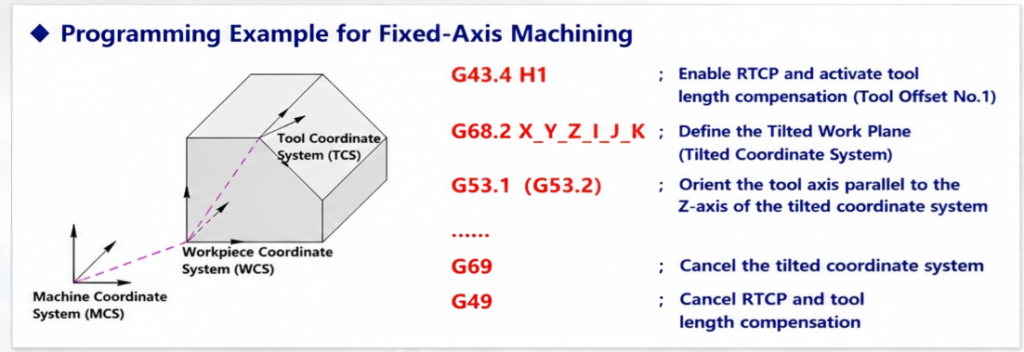
How to Perform Fixed-Axis Machining on HNC Systems
HNC controllers provide dedicated programming commands for fixed-axis (3+2) operations, and support three methods for establishing a feature (tilted) coordinate system, letting programmers choose the setup that best matches their CAM workflow and part geometry.

Real-World Application Examples
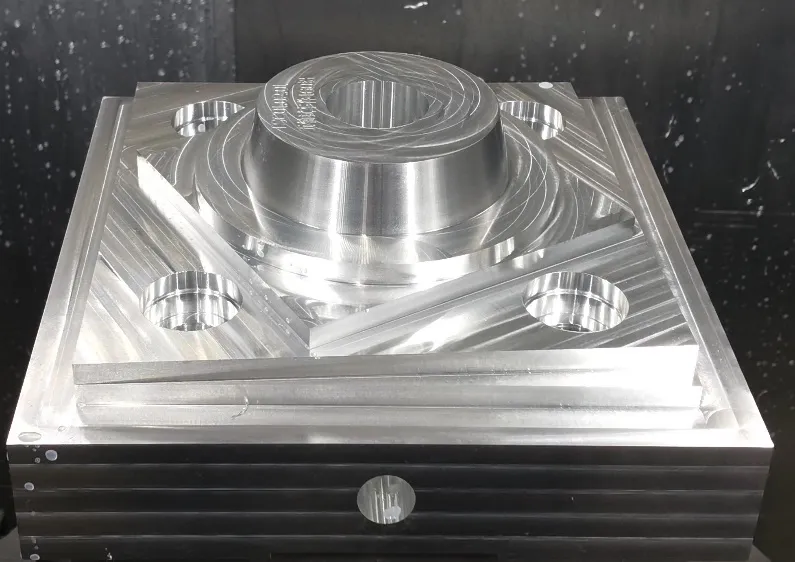
Scenario 1: Drilling Angled Holes (Fixed-Axis Machining)
Milling and drilling holes on an inclined plane is a textbook fixed-axis application: the spindle tilts once to align with the hole axis, locks, and the machine runs standard drilling cycles for fast, reliable results.
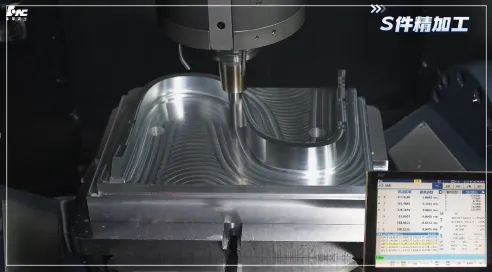
Scenario 2: Side Milling Finish of an S-Shaped Part (RTCP Linkage)
Continuously curved surfaces, like an S-shaped test part used to validate five-axis accuracy, require simultaneous rotary and linear motion. RTCP keeps the tool tip locked to the programmed toolpath throughout, delivering a smooth, accurate finish.
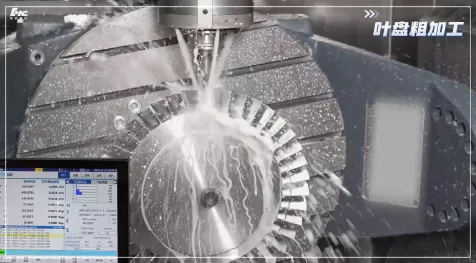
Scenario 3: Finishing Impeller Blades (RTCP Linkage)
Impeller and blisk blade finishing is one of the most demanding five-axis applications. The constantly changing blade curvature requires true 5-axis simultaneous linkage with RTCP active, so the tool tip tracks the design surface precisely as the rotary axes move continuously.
Conclusion: Choosing the Right Mode for the Job
Five-axis machining is not about showcasing capability for its own sake — it exists to solve the real challenge of machining complex parts efficiently and accurately. RTCP linkage gives a machine the flexibility to carve curved surfaces with a fluid, continuous motion, while fixed-axis machining preserves the rigidity, speed, and simplicity of traditional three-axis cutting.
Understanding the difference between RTCP and fixed-axis machining — and knowing which mode fits which scenario — is an essential step for any CNC engineer moving from three-axis to five-axis production.
Frequently Asked Questions
What does RTCP stand for in CNC machining?
RTCP stands for Rotational Tool Center Point. It is a real-time compensation function on five-axis CNC systems that keeps the tool tip on the programmed path whenever the rotary axes move.
What is the difference between RTCP and fixed-axis (3+2) machining?
RTCP enables true 5-axis simultaneous machining, where the rotary and linear axes move together while the control compensates the tool tip position in real time. Fixed-axis (3+2) machining locks the rotary axes after tilting, so the machine cuts with only the three linear axes, like a standard 3-axis machine.
When should I use fixed-axis machining instead of RTCP?
Fixed-axis machining is the better choice for drilling, tapping, reaming, or finishing flat and angled surfaces where G81/G83 drilling cycles, G41/G42 tool radius compensation, or G02/G03 circular interpolation are needed and continuous 5-axis motion isn’t required.
Do all five-axis CNC machines support RTCP?
Not automatically — RTCP must be supported by the CNC controller and correctly configured with accurate machine kinematic parameters. HNC five-axis controllers include dedicated commands to enable RTCP alongside fixed-axis programming.
Why does a program need to be regenerated if RTCP isn’t used?
Without RTCP, tool tip offsets are calculated manually for a specific tool length and machine geometry, so the program is tied to that setup. Any tool change or wear requires recalculating and regenerating the program.

