




How Robotic Automation Is Transforming Notebook Structural Components Manufacturing
A benchmark 3C notebook manufacturer in Southwest China partnered with HCNC Robotics to automate eight production processes — and unlocked new quality productivity along the way.
What “New Quality Productivity” Means for Notebook Structural Components Manufacturing
For traditional manufacturers, releasing new quality productivity is not an abstract policy goal — it shows up directly on the balance sheet. “Replacing manual labor with robots increases upfront capital investment, but it cuts costs, improves efficiency, and uses standardized operations to guarantee consistent product quality, helping the company win more market share,” explains a major 3C notebook manufacturer based in Southwest China. “After deploying HCNC Robotics equipment for digital and intelligent transformation, our product qualification rate rose sharply, and annual output value is projected to grow from RMB 100 million to RMB 500 million.”
That jump in production capacity did not happen by accident. It is the direct result of a full robotic automation upgrade built specifically for notebook structural components manufacturing — one of the most demanding segments in 3C electronics production.
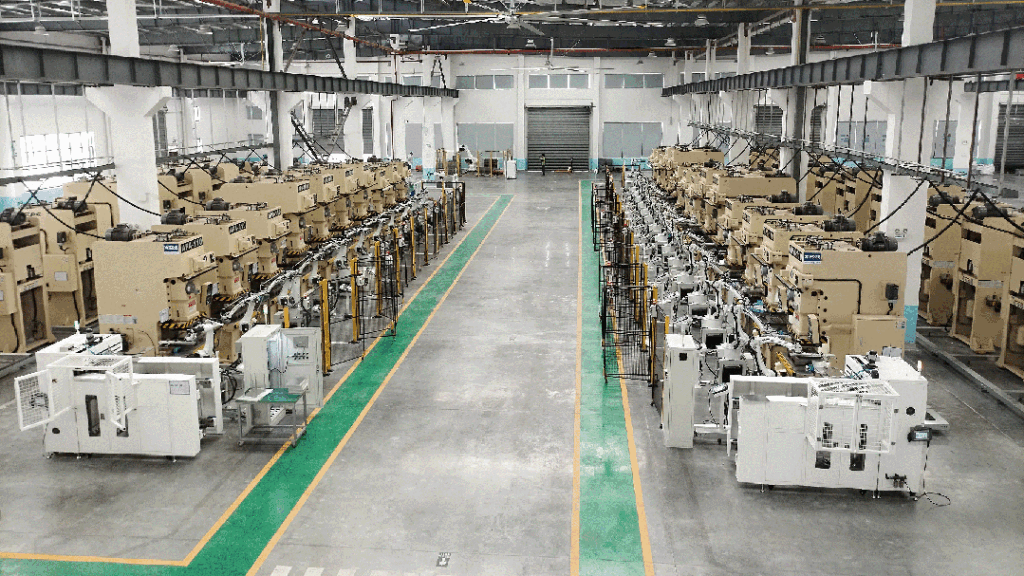
The Challenge: Complexity, Sustainability, and Speed
Notebook structural components manufacturers face three converging pressures:
- Rising process complexity as designs become thinner, lighter, and more intricate
- Growing pressure to meet green manufacturing and energy-efficiency targets
- Product iteration cycles compressed to just 3–6 months
The client needed to solve for both sides of this equation at once: keep existing production lines stable while rapidly scaling new quality productivity. HCNC Robotics worked directly with the client and its partners to run an in-depth production line diagnostic, then applied more than a decade of engineering experience in the 3C notebook industry to design a high-efficiency, high-precision automated manufacturing solution — one built to be replicated across the industry.
The Solution: A Four-Stage Robotic Automation Upgrade
HCNC Robotics restructured four of the client’s most labor-intensive processes — stamping, grinding, machining, and sandblasting — into unmanned or near-unmanned production lines.
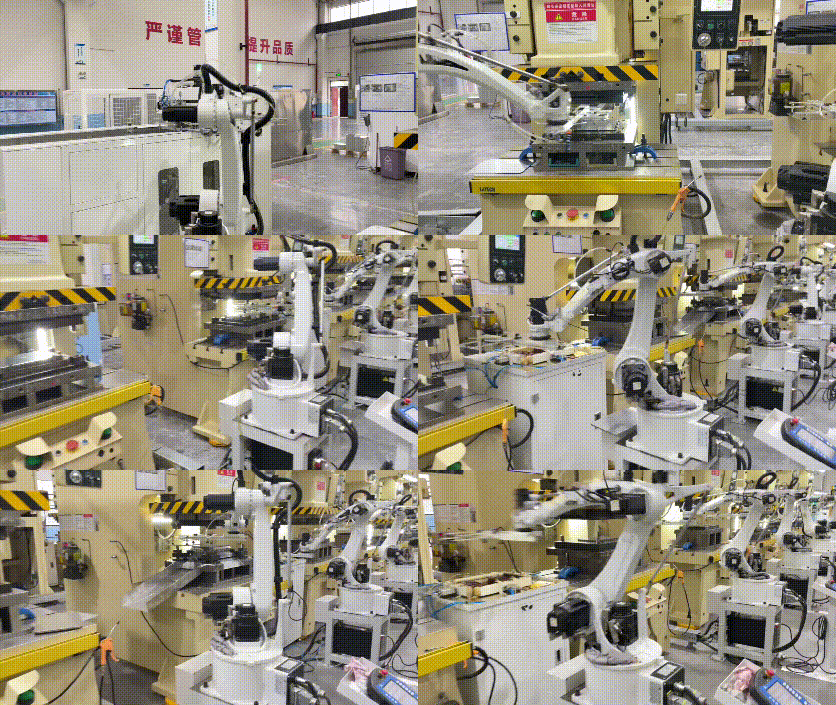
01. Unmanned, High-Efficiency Stamping
The RMD410 robot uses AGVs to retrieve raw material. Servo closed-loop control and path-optimization algorithms guide the end effector through high-speed, precise storage and retrieval, while a high-rigidity stamping die set completes an unmanned stamping line that holds stamping accuracy at a high production tempo.
02. Multi-Robot Collaborative Grinding
HCNC Robotics independently developed the grinding line’s control system, including full joint debugging between the robot system and the central controller. An adaptive dynamic scheduling algorithm continuously optimizes each robot’s material-handling priority, paired with a buffer-management layer that solves the classic cycle-time mismatch between grinding/polishing equipment and robots. A distributed control architecture coordinates material handling, temporary storage, and loading across multiple robots at once, keeping the whole line in dynamic balance and lifting overall equipment utilization.
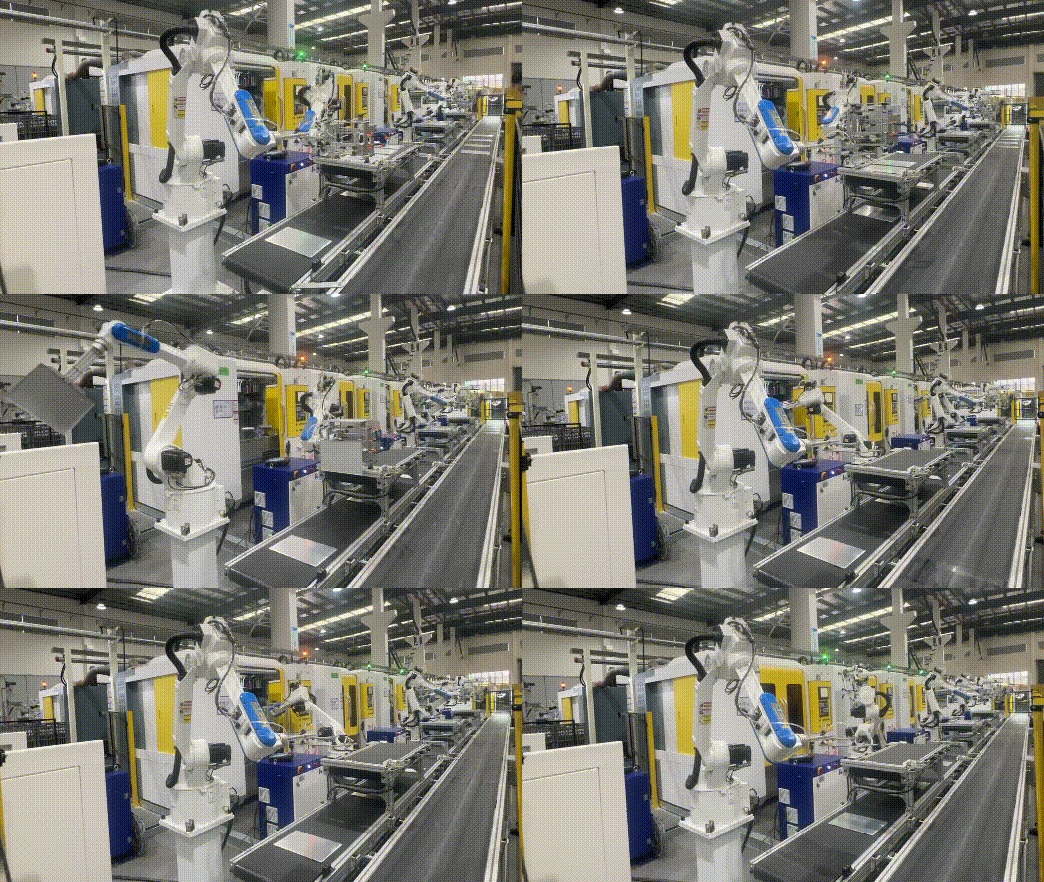
03. Continuous Loading and Unloading in CNC Machining
AGV-based intelligent logistics work alongside robots to create a fully automated CNC production line. AGVs deliver raw material to each workstation with precision; robots handle loading, machining, and finished-part unloading automatically. A closed-loop transport chain links AGVs and conveyors, connecting every processing unit seamlessly. Precision positioning and intelligent cycle control sharply cut reliance on manual labor and deliver an across-the-board efficiency upgrade.
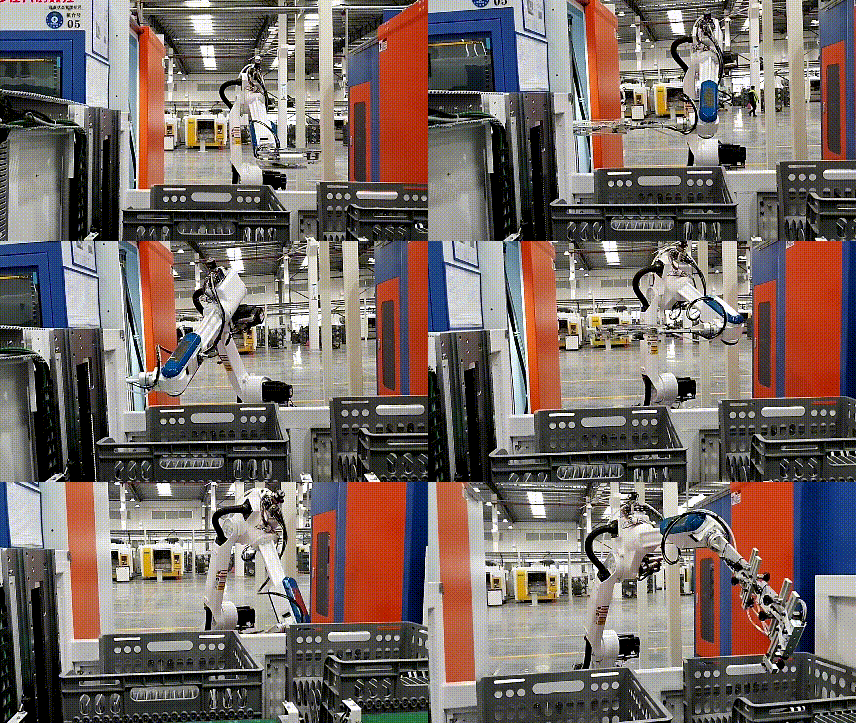
04. Fully Automated Sandblasting
Sandblasting is notoriously hard to automate: material positioning drifts, pushing motions can scratch structural components with metal abrasive, and cycle times routinely fall out of sync with the sandblasting machine. HCNC Robotics solved this with high-precision visual positioning compensation for dynamic grasping, flexible suction cups that eliminate surface contact damage, and an adaptive cycle algorithm that synchronizes in real time with the sandblasting machine’s operating frequency — a significant efficiency gain over manual operation and a genuine intelligent upgrade to a traditionally manual process.
Results: Measurable Impact Across the Production Line
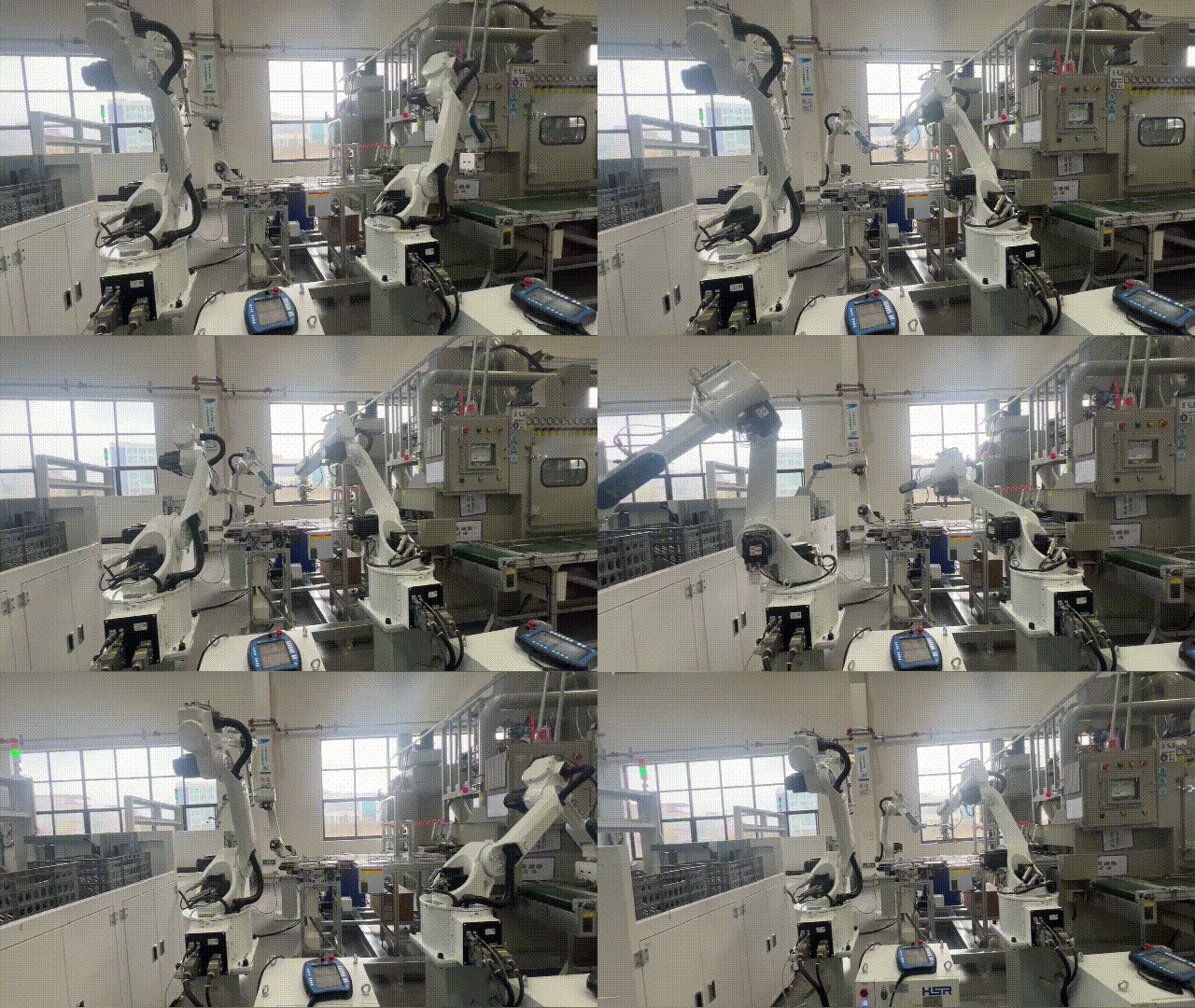
As a benchmark enterprise for digital and intelligent transformation in Southwest China, the client has now deployed more than 100 HCNC robots, upgrading eight process stages — stamping, machining, grinding, sandblasting, anodizing, laser engraving, assembly, and 3D scanning inspection — with AGVs handling transport between every stage. The result is a fully intelligent, integrated production flow.
Multiple workshops have also achieved full-process information management. Industrial-grade barcode scanners capture product data in real time and communicate bidirectionally with the MES system, building a complete digital loop for process-parameter traceability, production-progress monitoring, and quality-data management. That gives the client visualized production data and process-optimization analysis, which in turn strengthens product consistency and process reliability.
| Metric | Result After Automation |
| Labor cost savings | 30%+ reduction |
| Product qualification rate | 98%+ |
| Energy consumption | Reduced by 20% |
| Projected annual output value | RMB 100M → RMB 500M |
| Robots deployed | 100+ across 8 process stages |
A Replicable Model for New Quality Productivity
HCNC Robotics has built an ecosystem-level solution around “robots + multi-sensor fusion + informatization + digital twins.” The goal goes beyond single-point technology breakthroughs: it’s about shortening new-product introduction cycles, lowering total manufacturing cost, keeping process quality fully controllable, and building a digital manufacturing capability that keeps evolving. That is the new paradigm for intelligent manufacturing — and it’s what moves 3C manufacturing from experience-driven to data-driven.
Frequently Asked Questions
What is “new quality productivity” in manufacturing?
It refers to production gains driven by advanced technology — robotics, automation, digitalization, and intelligent systems — rather than by adding more manual labor or capacity alone. In notebook structural components manufacturing, this typically means higher yield, lower unit cost, and faster response to product iteration cycles.
Which production processes can be automated in notebook structural components manufacturing?
Based on this case, stamping, grinding/polishing, CNC machining loading and unloading, and sandblasting can all be automated with robots and AGVs. Additional processes such as anodizing, laser engraving, assembly, and 3D scanning inspection can also be integrated into a single automated line.
How much can robotic automation reduce labor costs in 3C manufacturing?
In this case study, the client achieved a labor cost reduction of more than 30% after completing its robotic automation upgrade, alongside a product qualification rate above 98% and a 20% cut in energy consumption.
What makes sandblasting difficult to automate?
Sandblasting is prone to material positioning deviations, surface scratches from metal abrasive during material pushing, and cycle-time mismatches with the sandblasting machine. High-precision visual positioning, flexible suction-cup end effectors, and adaptive cycle algorithms address each of these challenges.
What is included in HCNC Robotics’ automation solution?
HCNC Robotics’ solution integrates robots, multi-sensor fusion, informatization (MES integration), and digital twins into one ecosystem, rather than offering isolated point solutions for a single process.

